Why Most LinkedIn Outreach Strategies Fail at the Executive Level
If you run growth or demand generation for a B2B tech company, you already know the problem. Your sales team is sending LinkedIn messages. Response rates are flat. Meetings are not being booked. And the feedback from the field is always some variation of the same thing: “They’re just not getting back to us.”
The problem is rarely the product. And it is almost never the targeting.
The problem is the LinkedIn outreach strategy, specifically, the messaging patterns that get recycled from every growth playbook, LinkedIn newsletter, and sales enablement deck on the internet.
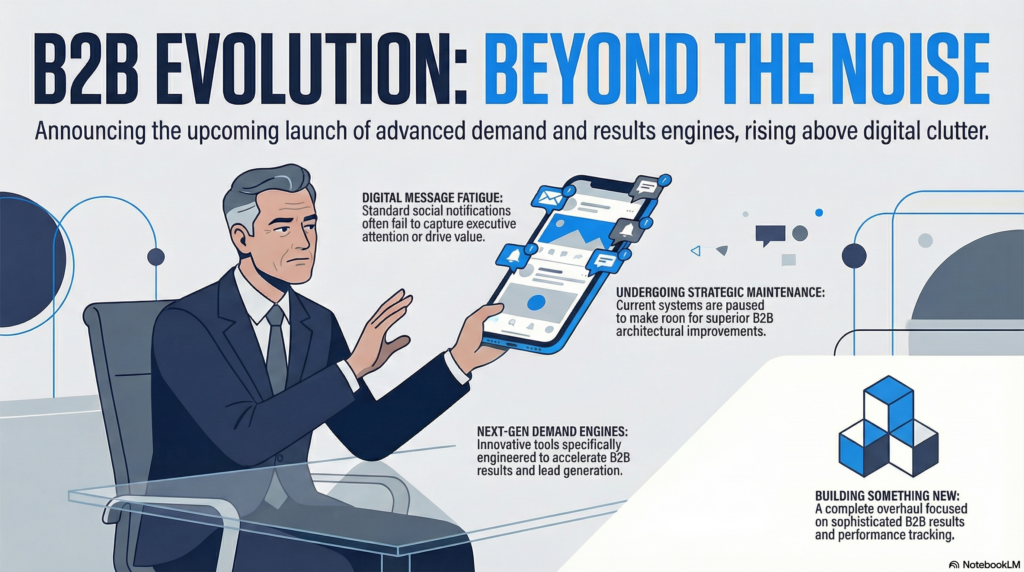
A recent discussion among sales professionals in a high-traffic online community laid this out with brutal clarity. When a startup growth professional shared three LinkedIn message templates for peer review, the top responses were unanimous:
- “I immediately lose interest when I see this type of opener.”
- “We can see through the fake flattery.”
- “Just tell me what you can do for me, how much it’ll save me, and what I need to do if I’m interested.”
This is not a new observation. But it is one that most B2B marketing and sales teams continue to ignore, because the templates that feel clever to write are exactly the templates that feel manipulative to receive.
This post breaks down why it happens, what C-level executives actually respond to, and how to build a LinkedIn outreach strategy that generates real pipeline, without burning your brand in the process.
B2B LinkedIn Outreach
Why most outreach strategies fail at the executive level
Your team is sending messages. Executives are ignoring them. The problem is not your product or your targeting. It is the messaging playbook itself.
Signal 1
Flat rates
Response rates are stagnant despite higher send volumes
Signal 2
No meetings
Calendar stays empty regardless of outreach cadence
Signal 3
No replies
“They’re just not getting back to us” — field feedback, every week
The same messaging patterns get recycled from every growth playbook, LinkedIn newsletter, and sales enablement deck. Templates that feel clever to write are exactly the templates that feel manipulative to receive.
What B2B executives actually say when they receive these messages
“I immediately lose interest when I see this type of opener.”
Sales leader, SaaS
“We can see through the fake flattery.”
Executive, US market
“Just tell me what you can do for me and what I need to do if I’m interested.”
C-suite respondent
The 3 Messages That Are Killing Your Pipeline
Before building something better, it is worth being specific about what is not working. Three message patterns dominate B2B LinkedIn outreach, and all three consistently underperform with senior decision-makers.
The “This Might Be Random” Apology Opener
“This might be a bit random, but I noticed what you’ve built at [Company], seriously impressive…”
This opener attempts to disarm the recipient by preemptively apologizing for the outreach. In theory, it creates psychological safety. In practice, it signals the opposite of confidence, and experienced executives recognize it immediately as a templated pattern.
More importantly, it is factually dishonest. The outreach is not random. The prospect was identified, qualified, and added to a sequence. Pretending otherwise does not lower their guard. It lowers your credibility.
The Generic Compliment Opener
“I came across what you’re building at [Company] and it’s really cool. Feels like not enough people are talking about how hard that stuff is to get right.”
Complimenting someone’s company costs nothing and provides no signal that you actually understand their business. C-suite executives receive dozens of these messages every week. The compliment is the tell: it is the part that confirms this is a spray-and-pray sequence, not a considered conversation.
As one sales leader put it: “American here. We can see through the fake flattery.” British, European, and global executives said exactly the same.
The “Advice-Seeking” Trojan Horse
“I’ve been trying to find go-to frameworks that actually work instead of just fluff. Curious if there’s anything you’ve leaned on that really helped?”
This is perhaps the most insidious pattern because it looks like genuine curiosity. But when used at scale as a templated opener, especially when the sender has no real intention of seeking advice. It is experienced as manipulative. Executives know that a question this open-ended, from someone they do not know, is designed to start a conversation that ends in a pitch.
The underlying problem with all three: they prioritize the sender’s pipeline over the recipient’s time. A strong LinkedIn outreach strategy does the opposite.
What C-Suite Executives Actually Want From Your First Message
Senior leaders at B2B tech companies share a few consistent preferences when it comes to cold outreach, regardless of channel:
Directness. They want to know who you are, what you do, and why you are reaching out, in that order, within the first two sentences. Not after a paragraph of rapport-building.
Relevance. A message that demonstrates genuine understanding of their business, their role, or their recent public activity (a post, an announcement, a hiring signal) carries far more weight than any compliment about their company being “impressive.”
Respect for time. The longer your opening message, the lower your response rate with senior executives. One paragraph is usually the ceiling. Two is almost always too many.
A low-friction ask. Asking for a 30-minute call in message one is a high-commitment request that most people will ignore or decline. A single, specific question, one that can be answered in two sentences, is far easier to say yes to.
Honesty about intent. Executives do not expect cold outreach to be purely altruistic. They know you are trying to build pipeline. What they do not tolerate is the pretense that you are not. Transparency about your intent, paired with a clear statement of value, outperforms false friendship every time.
“Just tell me what you can do for me, how much it’ll save me, and what I need to do if I’m interested.” (Senior sales practitioner)
This is not a radical idea. It is simply the standard that a well-executed LinkedIn outreach strategy should hold itself to.
How to Build a LinkedIn Outreach Strategy That Works in 2026
Here is a practical, five-step framework for building a LinkedIn outreach strategy that is designed for C-suite engagement, pipeline generation, and long-term relationship development in B2B tech.
Step 1: Define Your Signal, Not Your Script
Most teams start with a message template and then find prospects to send it to. Reverse that process.
Before writing a single word, identify the behavioral or contextual signal that makes this prospect the right person to contact right now. Effective signals include:
- A recent leadership post on a topic relevant to your solution
- A funding round, acquisition, or expansion announcement
- A new executive hire in a role adjacent to your offering
- A job posting that indicates a pain point your product addresses
- Shared membership in a professional community or event
The signal is your hook. It is the thing that makes your outreach specific, not just personalized. And it is the thing that makes a C-suite executive feel seen rather than targeted.
[INTERNAL LINK, anchor text: “demand generation signals for B2B outreach”] → link to related post on intent data or signal-based prospecting
Step 2: Write for One Person, Not a Segment
Personalization at scale is one of the most overused phrases in B2B marketing. What it usually means in practice is inserting {{first_name}} and {{company}} into a template that still reads like a template.
Genuine personalization means writing something that could only have been written for this person, based on something specific you observed about them. It does not require hours of research per contact. It requires a discipline of specificity.
A message that references a specific argument from a prospect’s recent post, and asks a focused follow-up question, will consistently outperform a compliment about their company. Why? Because it proves you actually paid attention, which is rare enough to be memorable.
Step 3: Lead With Value, Not Flattery
Your first sentence should answer the question every executive asks the moment they see a message from someone they do not know: “Why should I care?”
That answer is not about your company. It is not about how impressed you are by theirs. It is a direct, confident statement of what you do and what problem you solve for people in their position.
Structure it as:
[What you do] + [For whom] + [What outcome it drives]
Lead With Value, Not Flattery
The three-part framework for your first sentence
Every effective opening message answers one question in the executive’s mind: “Why should I care?” The answer fits in one sentence.
What you do
One verb. No jargon. No company name yet.
Ask yourself
What specific problem do I solve?
reduce time-to-hireFor whom
Role plus company type. Be specific enough to be relevant.
Ask yourself
Who exactly benefits most?
CTOs at mid-market SaaSWhat outcome
Quantified if possible. This is the reason they keep reading.
Ask yourself
What measurable result do I drive?
by an average of 40%The complete opening sentence
“I work with CTOs at mid-market SaaS companies to reduce time-to-hire for engineering leadership roles by an average of 40%.”
What you do
Specific action
For whom
Exact role and stage
What outcome
Quantified result
Rule 1
One sentence only
If it needs two sentences, it is not sharp enough yet.
Rule 2
No company name first
Lead with the outcome. Your brand earns attention later.
Rule 3
Relevance over rapport
If they recognize themselves in it, they will keep reading.
For example:
“I work with CTOs at mid-market SaaS companies to reduce time-to-hire for engineering leadership roles by an average of 40%.”
That is one sentence. It has specificity, a relevant audience, and a quantified outcome. A C-suite executive reading it immediately knows whether it is relevant to them, and if they find it relevant, they have a reason to keep reading.
This is the foundation of an effective LinkedIn outreach strategy for executive audiences: lead with relevance, not rapport.
Step 4: End With a Clear, Low-Friction Ask
The ask at the end of your first message determines whether the conversation continues. Most asks are too large. “Let’s hop on a quick call” requires the prospect to agree that your offering is worth 30 minutes of their attention, before you have made that case.
A more effective ask is a single, specific question that:
- Can be answered in one or two sentences
- Is directly related to the signal you identified in Step 1
- Creates a natural opening for a follow-up conversation
For example:
“Is reducing onboarding time something your team is actively focused on heading into Q3?”
This question is easy to answer, demonstrates relevance, and opens the door without demanding a meeting. It treats the executive’s time as a limited and valuable resource, which it is.
HubSpot’s B2B cold outreach benchmarks
Step 5: Build a Follow-Up Sequence That Respects Their Time
A single message is rarely enough. But a follow-up sequence that pings the same person with slight variations of the same pitch every three days is the fastest way to get blocked.
An executive-appropriate follow-up cadence looks like this:
Day 1: First message: signal-based, specific, direct, low-friction ask.
Day 7: Follow-up that adds new value: a relevant article, a data point, a case study specific to their vertical. No re-pitch. Just a reason to re-engage.
Day 14: Final outreach: transparent, honest, and brief. Something like: “I know timing may be off. If this ever becomes relevant, you know where to find me.”
This approach does something most sequences fail to do: it respects the relationship enough to exit gracefully. And that exit often generates more responses than the initial pitch did.
Message Templates That Work for B2B Executives
Message Templates
Three templates that work for B2B executives
Direct, honest, and signal-driven. Replace the highlighted fields before sending.
One rule before you send
Every highlighted field must be replaced with something specific and real. If any field stays generic, the message reads like a template, and executives will recognize it immediately.
The following templates are built on the framework above. They are direct, specific, and honest about intent. Adapt them to your context, but resist the urge to add flattery.
Template A: Signal-Based (Recent Post)
“[Name]: I read your post on [specific topic] and the point you made about [specific argument] stood out. I work with [role] teams on [problem area]. Curious: is [specific challenge related to their post] something you’re actively navigating? Happy to share what we’ve seen work.”
Template B: Outcome-First (No Prior Signal)
“[Name]: I lead [function] at [Company]. We help [specific role] at B2B tech companies [specific outcome, e.g., ‘reduce CAC by 20–30% through signal-based acquisition’]. Would it be worth a five-minute exchange to see if there’s any fit? No pitch, just a focused conversation.”
Template C: Trigger-Based (Funding / Expansion)
“[Name]: Congrats on the Series B. Companies at your stage typically face [specific challenge relevant to your offering] as they scale the GTM motion. We’ve helped [comparable company] work through that. Is that on your radar for 2025?”
Note on Template C: The congratulation is functional, not flattery. It establishes why you are reaching out now, which is a meaningful distinction from generic praise.
[INTERNAL LINK, anchor text: “trigger-based outreach for B2B demand generation”] → link to related content on signal-based GTM strategy
6. What to Measure in Your LinkedIn Outreach Strategy
A LinkedIn outreach strategy without measurement is marketing theater. At the executive level, the metrics that matter most are not vanity metrics.
Response rate by message variant. Test one variable at a time (opener format, ask structure, message length) and track response rates across a statistically meaningful sample (minimum 100 sends per variant).
Reply-to-meeting conversion rate. A high response rate that does not convert to meetings indicates your opening message is working but your follow-up is breaking down.
Sequence exit rate. How many prospects disengage entirely before message three? A high exit rate often signals a mismatch between the signal you identified and the message you sent.
Pipeline attribution. At the end of every quarter, trace closed-won deals back to their first touchpoint. How many originated from LinkedIn outreach? This is the only number that ultimately justifies the investment.
LinkedIn’s official B2B benchmarks for InMail response rates
What is the best LinkedIn outreach strategy for reaching C-suite executives?
The most effective LinkedIn outreach strategy for C-suite executives combines three elements: a specific behavioral signal (a recent post, an announcement, a hiring pattern) that justifies the outreach; a direct, one-sentence statement of what you do and what outcome it drives; and a low-friction ask that can be answered in two sentences. Avoid generic flattery, apologetic openers, and unsolicited long-form pitches. Executives value directness and respect for their time above all else.
How long should a LinkedIn outreach message be for B2B executives?
For C-level and senior executive audiences, the ideal LinkedIn outreach message is three to five sentences. One sentence to establish context or relevance, one to state your value proposition, and one to make a specific, low-effort ask. Messages exceeding two short paragraphs are frequently skipped or ignored by executives who receive multiple outreach attempts daily.
What LinkedIn outreach tactics no longer work for B2B sales?
Several once-effective LinkedIn outreach tactics have lost effectiveness due to overuse. These include the “this might be random” apologetic opener, generic compliments about a prospect’s company, the fake advice-seeking opener, and multi-paragraph pitches in a first message. These patterns are now immediately recognized as templated outreach sequences, which reduces trust before the conversation begins.
How do you personalize LinkedIn outreach at scale for B2B companies?
Effective personalization at scale in a LinkedIn outreach strategy depends on identifying categories of signals, including post engagement, funding events, hiring activity, and conference appearances, and then building message variants tied to each signal type. True personalization is not about inserting the prospect’s name into a template. It is about demonstrating that your message was triggered by something specific and real about their current situation.
How many LinkedIn outreach messages should you send before giving up?
A three-touch sequence is the standard for executive-level LinkedIn outreach: an initial signal-based message, a value-add follow-up at day seven, and a graceful exit at day fourteen. Sending more than three messages without a response risks damaging your brand reputation with the prospect and their extended network. Quality of cadence matters more than volume.
What is the difference between LinkedIn InMail and connection request outreach?
LinkedIn InMail allows you to message prospects outside your network and typically yields higher open rates because the message lands in a separate inbox. Connection request messages must be brief (under 300 characters with a note) and tend to work better when the connection itself provides value (e.g., shared community, event, or mutual contact). A complete LinkedIn outreach strategy often uses both, with InMail for high-priority accounts and connection requests for broader network building.
Should B2B companies use LinkedIn Sales Navigator for executive outreach?
LinkedIn Sales Navigator can be a powerful tool for identifying prospects and tracking behavioral signals, but it does not solve the underlying problem of message quality. Many practitioners report declining response rates from Sales Navigator sequences because prospects have become accustomed to InMail cadences. The platform amplifies whatever strategy you have. If the messaging is generic, Sales Navigator will help you deliver that message to more people, but it will not make it more effective.
Key Takeaways
The executives who respond to LinkedIn outreach are not responding to better templates. They are responding to messages that treat them as individuals with specific problems, limited time, and the ability to recognize when they are being managed versus spoken to directly.
A LinkedIn outreach strategy that works in 2025 is built on three non-negotiable principles:
- Signal before script. Know why you are reaching out now, to this person, with this message.
- Value before rapport. State what you do and why it matters before attempting to build a relationship.
- Directness over positioning. Say what you want. Respect the fact that they know you have an agenda. Let the quality of your value proposition do the work.
The companies generating consistent pipeline from LinkedIn are not sending more messages. They are sending better ones.
Want to build a demand generation system that integrates LinkedIn outreach with your full pipeline stack?